Contributing Author & Editorial Review
This article was crafted and reviewed by experienced professionals to ensure accuracy and practical insight.


DSCR Rental Loan Highlights
- Qualification based mainly on property cash flow (DSCR).
- No personal income docs required for many programs.
- Financing for 1–8 unit rentals, portfolios, and many STR/Airbnb deals.
- Up to 80% LTV on purchases and 75% LTV on cash-out (program-dependent).
- 30-year fixed and interest-only options available.
Commercial Real Estate Investment Guide 2025: Jacksonville Market Analysis & DSCR Calculations
Jacksonville, Florida, stands out in the 2025 commercial real estate (CRE) landscape as a city with steady population growth, expanding infrastructure, and diverse economic drivers. For seasoned and new investors alike, mastering the key financial metrics and underwriting strategies is critical for successful investment in the Jacksonville CRE market.
- Commercial Real Estate Investment Guide 2025: Jacksonville Market Analysis & DSCR Calculations
- Jacksonville CRE Market 2025: Trends & Opportunities
- Understanding Debt Service Coverage Ratio (DSCR)
- Net Operating Income (NOI): The Foundation of CRE Analysis
- Cap Rate: Market Valuation in Jacksonville
- Cash-on-Cash Return: Evaluating Leveraged Performance
- Comprehensive CRE Underwriting: Step-by-Step in 2025
- Lender Requirements and 2025 Loan Environment
- Risk Management and Diversification Strategies
- Tax Implications & Depreciation in CRE
- Case Study: Jacksonville Retail Strip 2025
- Challenges in 2025 and Forward Strategy
- Conclusion: Investor Success in Jacksonville CRE
Jacksonville CRE Market 2025: Trends & Opportunities
- Population and Job Growth: Jacksonville remains one of the fastest-growing metros in Florida.
- Diverse Asset Classes: Opportunities span multifamily, office, retail, industrial, and mixed-use properties.
- Favorable Tax Environment: Florida’s lack of state income tax and business-friendly climate continue to attract investors.
- Interest Rates: While rates remain elevated compared to previous years (5.75%-7.25% for commercial loans as of Q2 2025), lending appetite is robust for well-underwritten deals with strong cash flows.
Understanding Debt Service Coverage Ratio (DSCR)
The DSCR is one of the most critical metrics that both lenders and investors use to determine if a property generates sufficient income to cover its debt obligations. In Jacksonville’s dynamic market, DSCR standards are crucial in both acquisitions and refinancing decisions.
What is DSCR?
Debt Service Coverage Ratio (DSCR) = Net Operating Income (NOI) / Total Debt Service (Annual Loan Payments)
Need capital? GHC Funding offers flexible funding solutions to support your business growth or real estate projects. Discover fast, reliable financing options today!
⚡ Key Flexible Funding Options:
GHC Funding everages financing types that prioritize asset value and cash flow over lengthy financial history checks:
DSCR Rental Loan
- No tax returns required
- Qualify using rental income (DSCR-based)
- Fast closings ~3–4 weeks
SBA 7(a) Loan
- Lower down payments vs banks
- Long amortization improves cash flow
- Good if your business occupies 51%+
Bridge Loan
- Close quickly — move on opportunities
- Flexible underwriting
- Great for value-add or transitional assets
SBA 504 Loan
- Low fixed rates through CDC portion
- Great for construction, expansion, fixed assets
- Often lower down payment than bank loans
🌐 Learn More
For details on GHC Funding's specific products and to start an application, please visit our homepage:

- DSCR > 1.0: The property produces more income than required to cover debt payments.
- DSCR < 1.0: The property does not produce enough income to pay debt service.
2025 DSCR Benchmarks in Jacksonville
- Multifamily & Industrial: Minimum 1.25x-1.30x for agency and bank loans.
- Retail/Office: Lenders may accept DSCRs as low as 1.20x for stabilized assets but prefer >1.30x for new projects.
- Hotel & Hospitality: Higher DSCR requirements (1.35x+), reflecting operational volatility.
DSCR Calculation Example
Annual Net Operating Income: $400,000
Annual Debt Service: $320,000
DSCR = $400,000 / $320,000 = 1.25x
This property would likely qualify with most Jacksonville lenders for a typical commercial mortgage.
Net Operating Income (NOI): The Foundation of CRE Analysis
NOI is the bedrock of property valuation and DSCR calculations. Understanding how to accurately project and normalize NOI is a fundamental investor skill.
How to Calculate NOI
NOI = Gross Operating Income (GOI) - Operating Expenses- GOI: Total income from rents and other sources (e.g., parking, laundry), net of vacancy and credit losses.
- Operating Expenses: Regular, recurring property expenses (taxes, insurance, management, repairs), excluding debt service and depreciation.
NOI Calculation Example
Gross Rental Income: $550,000
Other Income: $25,000
Vacancy/Credit Loss (5%): ($28,750)

Gross Operating Income = $550,000 + $25,000 - $28,750 = $546,250

Operating Expenses:
   Taxes: $38,000
   Insurance: $16,000
   Management: $28,000
   Maintenance: $27,000
   Utilities: $13,000
   Miscellaneous: $6,000
Total Expenses = $128,000

NOI = $546,250 - $128,000 = $418,250
Cap Rate: Market Valuation in Jacksonville
The capitalization rate (cap rate) is a key measure of a property’s return (unleveraged) based on its NOI and market value. It’s also a primary tool for property valuation.
Cap Rate Formula
Cap Rate = NOI / Purchase Price (or Market Value)Jacksonville 2025 Cap Rate Ranges
- Multifamily: 5.0% – 5.75%
- Office: 6.5% – 7.25%
- Industrial: 5.25% – 5.85%
- Retail: 6.0% – 7.0%
Value Determination Example
NOI: $418,250
Market Cap Rate: 6.0%

Market Value = NOI / Cap Rate = $418,250 / 0.06 = $6,970,833
This framework helps investors assess whether a property is undervalued or overpriced relative to the Jacksonville marketplace and its peer assets.
Cash-on-Cash Return: Evaluating Leveraged Performance
Cash-on-cash return (CoC) is an essential metric for assessing leveraged returns and cash flow adequacy, especially in markets with rising property values such as Jacksonville.
Cash-on-Cash Return Formula
Cash-on-Cash Return = (Annual Pre-Tax Cash Flow / Total Equity Invested) x 100%Calculation Example (Jacksonville Apartment Purchase)
Purchase Price: $6,970,833
Loan Amount (75%): $5,228,125
Equity Invested: $1,742,708
NOI: $418,250
Annual Debt Service: $320,000
Annual Pre-Tax Cash Flow = $418,250 - $320,000 = $98,250

CoC Return = ($98,250 / $1,742,708) x 100% = 5.64%
Comprehensive CRE Underwriting: Step-by-Step in 2025
- Market Analysis: Evaluate Jacksonville’s local submarket, competitive properties, demographics, employment drivers and absorption trends.
- Rent & Occupancy Projections: Normalize rent rolls to market rates; apply realistic assumptions for both current and pro forma performance.
- Expense Review: Verify expense items via third-party quotes and historicals. Normalize property taxes post-acquisition.
- NOI Calculation: Build pro forma and stress-test for downside scenarios (e.g., higher vacancy, inflationary expenses).
- Debt Modeling: Assess loan terms, rate spreads, amortization, prepayment penalties, and lender underwriting standards (stress DSCR and minimum coverage ratios).
- Valuation: Run cap rate-based, sales comparison, and discounted cash flow (DCF) analyses for triangulation.
- Exit Strategy: Model various sale/refinance scenarios under optimistic, moderate, and pessimistic conditions.
- Risk Assessment: Consider tenant credit, rollover risk, capital expenditure needs, environmental and regulatory compliance.
Lender Requirements and 2025 Loan Environment
- DSCR Minimums: Typically 1.25x-1.35x (can be higher for hospitality or special-use properties).
- Loan-to-Value (LTV): 65%-75% for stabilized properties, slightly lower for transitional assets.
- Debt Yield: Minimums now at 8%-9% for many lenders.
- Interest Rate Trends: Rates expected to remain in the 5.75%-7.25% range through most of 2025, creating a premium on strong cash flows and stable tenancy.
- Third-Party Reports: Updated appraisals, Phase I Environmental Site Assessments, and Property Condition Assessments required for all institutional debt.
Risk Management and Diversification Strategies
- Asset Diversification: Blend property types (multifamily, industrial, retail) or location strategy to hedge against submarket fluctuations.
- Hold Period Strategy: Analyze value-add and core-plus plays; stress-test shorter versus longer hold periods against interest rate and demand cycles.
- Exit Options: Always underwrite multiple exit options (sale, refinance, portfolio recap)
Tax Implications & Depreciation in CRE
- Depreciation: 39-year schedule for commercial, 27.5 years for multifamily residential. Bonus depreciation and cost segregation studies remain vital value enhancers in 2025.
- 1031 Exchange: Remains a compelling tax-deferral tool in Florida, especially for portfolio scaling.
- Interest Deductibility: Ensure compliance with business interest expense limitations (IRC Section 163(j)).
Case Study: Jacksonville Retail Strip 2025
- Asset: Stabilized 18,000 SF community retail with service tenants.
- NOI: $290,000
- Purchase Price: $4,145,000 (7.0% cap rate)
- Loan Terms: $2,900,000 (70% LTV), 6.5% fixed, 25-year amortization, annual debt service: $227,000
- DSCR: $290,000 / $227,000 = 1.28x
- Equity Investment: $1,245,000
- Annual Cash Flow: $290,000 – $227,000 = $63,000
- Cash-on-Cash Return: $63,000 / $1,245,000 = 5.06%
This investment meets lender standards, allows for positive cash flow, and benefits from both stable lease structures and Jacksonville’s robust consumer base.
Challenges in 2025 and Forward Strategy
- Elevated Interest Rates: Increases borrowing costs, impacts leverage, and compresses cash-on-cash returns. Solution: Seek creative structures such as interest-only periods or fixed-to-floating options.
- Operating Expenses: Continued insurance and tax increases in Florida. Solution: Diligent underwriting, competitive bidding, and proactive appeals on property assessments.
- Supply/Demand Shifts: Stay ahead of submarket performance and demographic shifts using GIS-backed data and robust market research.
Get a Free Rate Today
Compare our top-rated commercial and investment property loan programs below.
- No income verification
- 30-year fixed | Interest-only available
- Great for rental properties + STR
- Fast approvals
- Working capital + business acquisition
- Up to $5M
- Low down payment
- Long-term financing
- Owner-occupied CRE
- Low fixed rates | 25-year terms
- Great for business expansion
- Refinance available
- Best for stabilized properties
- Competitive rates
- 12–25 year terms
- Lower fees than private lenders
Compare Loan Types
Find the Right Financing for Your Real Estate or Business Project
| Loan Type | Best For | Rates | Terms | Highlights | Apply |
|---|---|---|---|---|---|
| DSCR Loan | Rental properties (LTR & STR) | 5.99%+ | 30-year fixed, IO options | No income docs, fast approvals, great for investors | Check My Rate |
| Construction Loan | Ground-up, fix & build, major renovations | 8%–12% depending on scope | 12–24 months interest-only | Flexible draws, great for builders & developers | Get a Quote |
| SBA Loan | Business acquisition, working capital, CRE | Prime + spread | 10–25 years | Lowest down payments, long terms, best for business growth | See My Options |

SBA Loan Requirements for Startups in Florida Now
GHC Funding Website Published: March 9, 2026 Categories: blog Reading Time: 3 minutes read Understanding SBA Loan Requirements for Startups in Florida:…
Read more →
“Prompt Engineering” Myth: How to Actually Talk to AI
GHC Funding Website Published: March 6, 2026 Categories: blog Reading Time: 4 minutes read 🗣️ The “Prompt Engineering” Myth: How to Actually…
Read more →
No-B.S. AI Guide to Work Less and Grow More in 2026 Now
GHC Funding Website Published: March 6, 2026 Categories: blog Reading Time: 5 minutes read 🚀 The No-B.S. Guide to AI for Small…
Read more →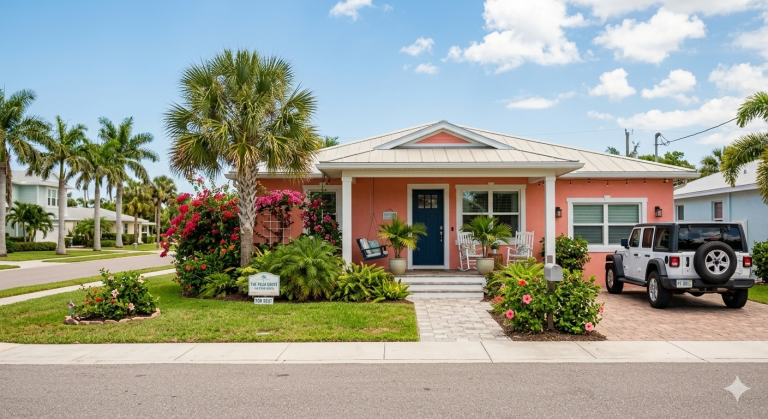
No Doc DSCR Loans for Property in Florida Now
GHC Funding Website Published: March 5, 2026 Updated: March 6, 2026 Categories: blog Reading Time: 3 minutes read Unlocking Investment Potential: No…
Read more →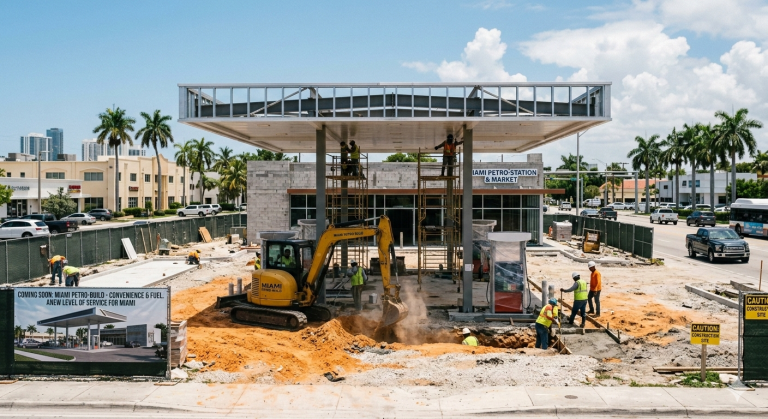
Construction Loan Lenders and Process in Florida Now
GHC Funding Website Published: March 5, 2026 Categories: blog Reading Time: 3 minutes read Unlocking Opportunities: Navigating Construction Loan Lenders in Florida…
Read more →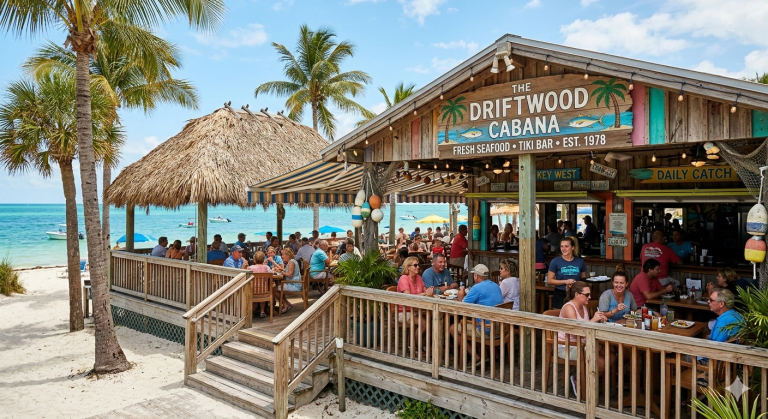
Get The SBA Express Loan Application in Florida Now
GHC Funding Website Published: March 5, 2026 Categories: blog Reading Time: 3 minutes read Simplifying the SBA Express Loan Application Process in…
Read more →Conclusion: Investor Success in Jacksonville CRE
Mastering the principles of DSCR, NOI, cap rates, and rigorous underwriting is essential in the 2025 Jacksonville commercial real estate market. With careful analysis, proper risk controls, and an adaptive investment strategy, both new and experienced investors can capitalize on Jacksonville’s steady growth and favorable investment climate.
Disclaimer: This article is for educational purposes only and not investment or lending advice. Always consult with licensed professionals and utilize latest financial and market data before making investment decisions.
Get a No Obligation Quote Today.

Use these trusted resources to grow and manage your small business—then connect with GHC Funding
to explore financing options tailored to your needs.
GHC Funding helps entrepreneurs secure working capital, equipment financing, real estate loans,
and more—start your funding conversation today.
Helpful Small Business Resources