Contributing Author & Editorial Review
This article was authored and professionally reviewed to provide accurate, actionable financial insights.

GHC Funding
Contributing Author
Alyssa writes about real estate investing, debt-free strategies, and emerging trends in small business finance with a focus on practical insights.

Samantha Reyes
Senior Content Editor
Samantha specializes in editorial strategy, compliance review, and refining complex finance topics into accessible, reader-friendly guidance.
SBA 7(a) & 504 Highlights
- Loan amounts from $100,000 up to $15 million+ (program-dependent).
- Up to 90% financing for eligible acquisitions, real estate, and equipment.
- Use funds for working capital, refinance, expansion, and partner buyout.
- Longer terms (up to 25 years on real estate) to keep payments manageable.
Business Finance Analysis 2025: How Boston Small Businesses Can Optimize Cash Flow and Cut Costs
The economic landscape in 2025 presents fresh challenges and unique opportunities for small businesses in Boston. As the region continues its recovery and adapts to shifts in consumer demand and supply chain dynamics, business owners must proactively analyze their finances, identify weaknesses, and adopt strategies to optimize cash flow while reducing expenses. This comprehensive guide explores actionable methods, case studies, and local insights tailored specifically to Boston’s small business community.
- Business Finance Analysis 2025: How Boston Small Businesses Can Optimize Cash Flow and Cut Costs
- Understanding Boston’s Small Business Ecosystem in 2025
- 1. Identifying Financial Weaknesses: The Foundation of Financial Analysis
- 2. Improving Cash Flow: Strategies for Immediate and Long-term Impact
- 3. Cutting Costs Effectively Without Sacrificing Quality
- 4. Leveraging Technology and Data for Smarter Financial Management
- 5. Step-by-Step Guide to Immediate Financial Improvement
- 6. Local Resources for Boston Business Owners
- 7. Practical Tips for Boston’s Unique Challenges
- Conclusion: A Blueprint for Resilience in 2025
Understanding Boston’s Small Business Ecosystem in 2025
Boston’s vibrant economy is powered by a diverse array of small businesses—from local retail stores in Back Bay and North End restaurants to South Boston tech startups and service providers across Roxbury and Dorchester. Increased competition, rising operational costs, and evolving consumer behaviors in the post-pandemic world require a sharper focus on financial acumen for survival and growth.
1. Identifying Financial Weaknesses: The Foundation of Financial Analysis
Effective cash flow optimization and cost-cutting begin with a clear-eyed assessment of financial weaknesses. Common pitfalls Boston businesses face in 2025 include:
Need capital? GHC Funding offers flexible funding solutions to support your business growth or real estate projects. Discover fast, reliable financing options today!
⚡ Key Flexible Funding Options:
GHC Funding everages financing types that prioritize asset value and cash flow over lengthy financial history checks:
DSCR Rental Loan
- No tax returns required
- Qualify using rental income (DSCR-based)
- Fast closings ~3–4 weeks
SBA 7(a) Loan
- Lower down payments vs banks
- Long amortization improves cash flow
- Good if your business occupies 51%+
Bridge Loan
- Close quickly — move on opportunities
- Flexible underwriting
- Great for value-add or transitional assets
SBA 504 Loan
- Low fixed rates through CDC portion
- Great for construction, expansion, fixed assets
- Often lower down payment than bank loans
🌐 Learn More
For details on GHC Funding's specific products and to start an application, please visit our homepage:

- Overdependence on limited revenue streams or client bases
- Poorly tracked or unmanaged discretionary spending
- Underutilized assets and inventory bloat, especially in retail and hospitality
- Overstaffing relative to demand fluctuations
- Slow collections on receivables impacting cash reserves
- Rising rents and commercial real estate costs in prime neighborhoods
Checklist: How to Identify Financial Weaknesses
- Review Financial Statements Monthly: Scrutinize your income statement, balance sheet, and cash flow statement for anomalies or negative trends.
- Conduct Ratio Analysis: Track liquidity ratios (current ratio, quick ratio), net margin, accounts receivable turnover, and debt-to-equity.
- Utilize Benchmarks: Compare your KPIs to Boston regional averages in your sector (available from the Small Business Association of New England and Greater Boston Chamber of Commerce).
- Map Cash Flow Cycles: Visualize cash inflows and outflows on a weekly and monthly basis to spot seasonal gaps and bottlenecks.
- Solicit Feedback: Gather insights from finance staff, frontline employees, and trusted advisors for ground-level perspectives.
2. Improving Cash Flow: Strategies for Immediate and Long-term Impact
Consistent cash flow is the lifeblood of any Boston enterprise. In 2025, supply chain unpredictability and interest rate fluctuations mean traditional approaches must be adapted. Core strategies include:
A. Accelerate Receivables
- Use digital invoicing and local fintech platforms (e.g., Boston-based Flywire) for faster payment processing.
- Incentivize early payments with Boston-centric discounts or loyalty rewards.
- Implement strict credit terms and follow-up schedules.
B. Defer or Negotiate Payables
- Negotiate longer vendor payment terms—many suppliers in the Northeast region are more flexible in 2025 due to supply chain realignments.
- Consider bill consolidation to ease short-term financial pressure.
C. Manage Inventory Efficiently
- Adopt just-in-time strategies to reduce inventory holding costs—crucial for Boston’s high-rent retail sectors.
- Leverage data analytics to forecast demand spikes during local events and travel seasons.
D. Monitor and Control Capital Expenditures
- Delay non-essential equipment upgrades unless ROI can be quantified within 12 months.
- Utilize Boston’s growing equipment leasing markets rather than buying outright.
Case Study: South Boston Brewpub
Background: A local brewpub faced extended payment cycles post-pandemic. By adopting digital invoicing through a regional fintech, reducing inventory bloat, and renegotiating with Massachusetts-based suppliers to net-60 terms, it improved monthly cash flow by 26% in less than six months.
3. Cutting Costs Effectively Without Sacrificing Quality
In Boston’s expensive real estate and labor market, cost control requires innovation and diligence.
A. Audit All Expense Categories Quarterly
- Scrutinize subscriptions, vendor contracts, and service agreements for redundancy—many Boston small businesses spend 15% more annually on software tools than needed.
- Collect bids from local competing suppliers for better rates.
B. Go Local to Mitigate Supply Costs
- Partner with Boston-area producers or service providers who may offer loyalty discounts.
- Group purchases with other Boston-area businesses to leverage volume discounts.
C. Adopt Flexible Scheduling and Staffing
- Experiment with part-time, gig, and job-sharing models during slow seasons.
- Cross-train employees to cover multiple responsibilities, reducing the need for contractors.
D. Embrace Energy Efficiency
- Take advantage of Mass Save incentives for energy upgrades in commercial spaces.
- Implement smart thermostats and LED lighting to reduce monthly utility bills by up to 18%.
Case Study: North End Retailer
Background: The owner of a clothing boutique in Boston’s North End used a three-step expense audit, identifying $800/month in unnecessary cloud software SaaS costs. By renegotiating cleaning contracts and switching to local energy-efficient providers, total operating expenses dropped 14% year-over-year.
4. Leveraging Technology and Data for Smarter Financial Management
2025 technology has democratized access to advanced financial tools for Boston’s small business sector.
- Cloud Accounting Tools: Implement platforms like QuickBooks Online or Wave for real-time financial visibility.
- Artificial Intelligence: Use AI-driven analytics to spot fraud, monitor anomalies, and forecast cash shortfalls.
- Mobile Payments: Accept Apple Pay, Google Pay, and Boston-based mobile wallets to broaden payment capture.
- KPI Dashboards: Custom dashboards to track top KPIs (see below) in real-time.
Checklist: Recommended KPIs for Boston Small Businesses in 2025
- Operating Cash Flow Ratio
- Gross & Net Profit Margins
- Accounts Receivable Turnover
- Inventory Turnover
- Expense Ratio (by category)
- Current Ratio (Liquidity)
- Debt-to-Equity Ratio
5. Step-by-Step Guide to Immediate Financial Improvement
- Download Last 12 Months’ Financials and run a variance analysis to spot expense increases and sales dips.
- Map Your Cash Flow Calendar to identify weeks with expected cash crunches and arrange for short-term lines of credit as backup.
- Audit All Monthly Subscriptions and cancel or consolidate redundant services by the end of the month.
- Contact Top Three Vendors to renegotiate terms—leverage local chamber affiliations for group discounts.
- Switch Utility Providers or enroll in Mass Save for quick-win utility cost reductions.
- Implement a 7-Day Receivables Follow-Up Program by assigning responsibility or automating reminders.
- Schedule Quarterly Financial Review Meetings with your accountant or business advisor.
6. Local Resources for Boston Business Owners
- Boston SBA District Office
- Greater Boston Chamber of Commerce
- Massachusetts Growth Capital Corporation
- Mass Save for Business
7. Practical Tips for Boston’s Unique Challenges
- Monitor the impact of increasing minimum wage laws on wage expenses, especially in central Boston.
- Leverage local universities and business schools for interns or consulting projects on finance optimization.
- Tap into innovation grants for tech adoption and energy efficiency upgrades available in the state.
Get a Free Rate Today
Compare our top-rated commercial and investment property loan programs below.
- No income verification
- 30-year fixed | Interest-only available
- Great for rental properties + STR
- Fast approvals
- Working capital + business acquisition
- Up to $5M
- Low down payment
- Long-term financing
- Owner-occupied CRE
- Low fixed rates | 25-year terms
- Great for business expansion
- Refinance available
- Best for stabilized properties
- Competitive rates
- 12–25 year terms
- Lower fees than private lenders
Compare Loan Types
Find the Right Financing for Your Real Estate or Business Project
| Loan Type | Best For | Rates | Terms | Highlights | Apply |
|---|---|---|---|---|---|
| DSCR Loan | Rental properties (LTR & STR) | 5.99%+ | 30-year fixed, IO options | No income docs, fast approvals, great for investors | Check My Rate |
| Construction Loan | Ground-up, fix & build, major renovations | 8%–12% depending on scope | 12–24 months interest-only | Flexible draws, great for builders & developers | Get a Quote |
| SBA Loan | Business acquisition, working capital, CRE | Prime + spread | 10–25 years | Lowest down payments, long terms, best for business growth | See My Options |

SBA Loan Requirements for Startups in Florida Now
GHC Funding Website Published: March 9, 2026 Categories: blog Reading Time: 3 minutes read Understanding SBA Loan Requirements for Startups in Florida:…
Read more →
“Prompt Engineering” Myth: How to Actually Talk to AI
GHC Funding Website Published: March 6, 2026 Categories: blog Reading Time: 4 minutes read 🗣️ The “Prompt Engineering” Myth: How to Actually…
Read more →
No-B.S. AI Guide to Work Less and Grow More in 2026 Now
GHC Funding Website Published: March 6, 2026 Categories: blog Reading Time: 5 minutes read 🚀 The No-B.S. Guide to AI for Small…
Read more →
No Doc DSCR Loans for Property in Florida Now
GHC Funding Website Published: March 5, 2026 Updated: March 6, 2026 Categories: blog Reading Time: 3 minutes read Unlocking Investment Potential: No…
Read more →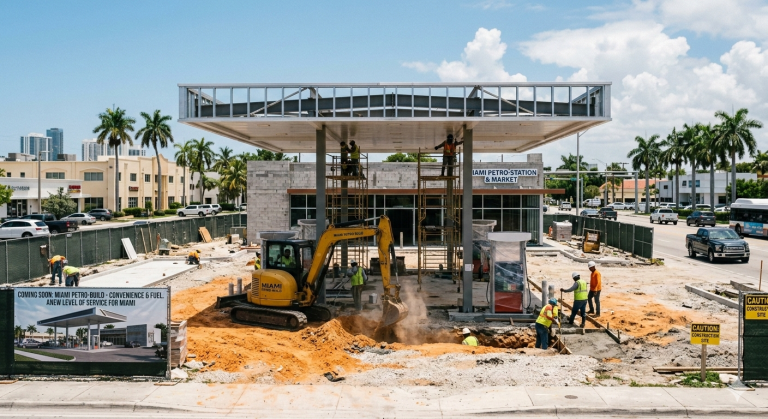
Construction Loan Lenders and Process in Florida Now
GHC Funding Website Published: March 5, 2026 Categories: blog Reading Time: 3 minutes read Unlocking Opportunities: Navigating Construction Loan Lenders in Florida…
Read more →
Get The SBA Express Loan Application in Florida Now
GHC Funding Website Published: March 5, 2026 Categories: blog Reading Time: 3 minutes read Simplifying the SBA Express Loan Application Process in…
Read more →Conclusion: A Blueprint for Resilience in 2025
Boston small business owners who embrace rigorous financial analysis, digital transformation, and proactive cost management will thrive even in uncertain times. Regularly reviewing weakness areas, seizing cash flow opportunities, and cutting unnecessary expenses is not just survival—it’s a pathway to long-term profitability and local market leadership. By leveraging the step-by-step frameworks and local resources above, Boston entrepreneurs are equipped to drive sustainable growth throughout 2025 and beyond.
Get a No Obligation Quote Today.

Use these trusted resources to grow and manage your small business—then connect with GHC Funding
to explore financing options tailored to your needs.
GHC Funding helps entrepreneurs secure working capital, equipment financing, real estate loans,
and more—start your funding conversation today.
Helpful Small Business Resources