Maryland Inflation Budgeting & Real Estate Investment Guide 2025: State-Specific Strategies
Maryland stands at a strategic crossroads in 2025, linking the dynamic economies of the Northeast with the rapidly growing Southeast region. With soaring inflation pressuring households and investors alike, understanding localized budgeting techniques and real estate investment strategies is crucial for thriving in Maryland’s uniquely diverse economic environment.
- Maryland Inflation Budgeting & Real Estate Investment Guide 2025: State-Specific Strategies
- Maryland Economic Indicators & Inflation Trends (2025)
- Inflation-Proof Budgeting for Maryland Residents
- Best Real Estate Investments in Maryland During High Inflation
- Maryland Local Market Conditions & Regional Trends
- State Economic Forecast & Fiscal Policy Outlook (2025)
- Inflation Hedging Strategies: Maryland-Specific Tactics
- Maryland’s Population & Economic Drivers
- Property Taxes and Regulatory Environment
- Case Studies: Maryland’s Urban Rental Success Stories
- Actionable Recommendations for Maryland Investors
- Conclusion: Thriving in Maryland’s Inflationary Environment
Maryland Economic Indicators & Inflation Trends (2025)
- Inflation Rate (Q2 2025): 4.9% (Baltimore-Columbia-Towson MSA)
- State GDP Growth: 2.7% (steady despite national volatility)
- Unemployment Rate: 3.5% (below US average)
- Median Household Income (2025): $89,500
- Cost of Living Index: 118.2 (18.2% above national average)
Maryland’s economic resilience is fueled by federal, medical, and tech sectors, particularly in the Baltimore region and the suburban corridor near Washington, D.C. Recent inflation trends reflect Maryland’s higher sensitivity to changes in housing, transportation, and education costs, placing unique pressures on residents and investors alike.
Inflation-Proof Budgeting for Maryland Residents
Major Cost Components in Maryland (2025):
- Housing: Median home price: $398,000; median rent: $1,735/mo.
- Utilities: 5.1% year-over-year increase
- Transportation: Up 7% in urbanized areas (Baltimore, Bethesda)
- Groceries: 6.3% inflation, particularly on mid-Atlantic staples
Key State-Specific Budgeting Recommendations:
- Shop Around for Housing: Consider emerging markets within Maryland’s suburbs (Columbia, Frederick, Bel Air) where housing inflation is currently under 3% year-over-year.
- Utilities: Lock in energy rates where available; Maryland’s partial deregulation allows price comparison shopping.
- Transportation: Utilize Maryland’s extensive MARC and Metro transit networks to reduce vehicle-related inflation exposure.
- Property Taxes: Budget for variable local rates (Baltimore City: 2.248%; Montgomery County: 0.948%).
- Education and Childcare: Leverage Maryland’s state incentives for childcare expenses and education savings plans, offsetting rising service costs.
Best Real Estate Investments in Maryland During High Inflation
Due to persistent inflation, real estate investments tied to rental income and urban resilience outperform. In 2025, urban rental properties stand out due to: high demand in city centers, steady in-migration, and stable local employment markets.
Need capital? GHC Funding offers flexible funding solutions to support your business growth or real estate projects. Discover fast, reliable financing options today!
⚡ Key Flexible Funding Options:
GHC Funding everages financing types that prioritize asset value and cash flow over lengthy financial history checks:
DSCR Rental Loan
- No tax returns required
- Qualify using rental income (DSCR-based)
- Fast closings ~3–4 weeks
SBA 7(a) Loan
- Lower down payments vs banks
- Long amortization improves cash flow
- Good if your business occupies 51%+
Bridge Loan
- Close quickly — move on opportunities
- Flexible underwriting
- Great for value-add or transitional assets
SBA 504 Loan
- Low fixed rates through CDC portion
- Great for construction, expansion, fixed assets
- Often lower down payment than bank loans
🌐 Learn More
For details on GHC Funding's specific products and to start an application, please visit our homepage:
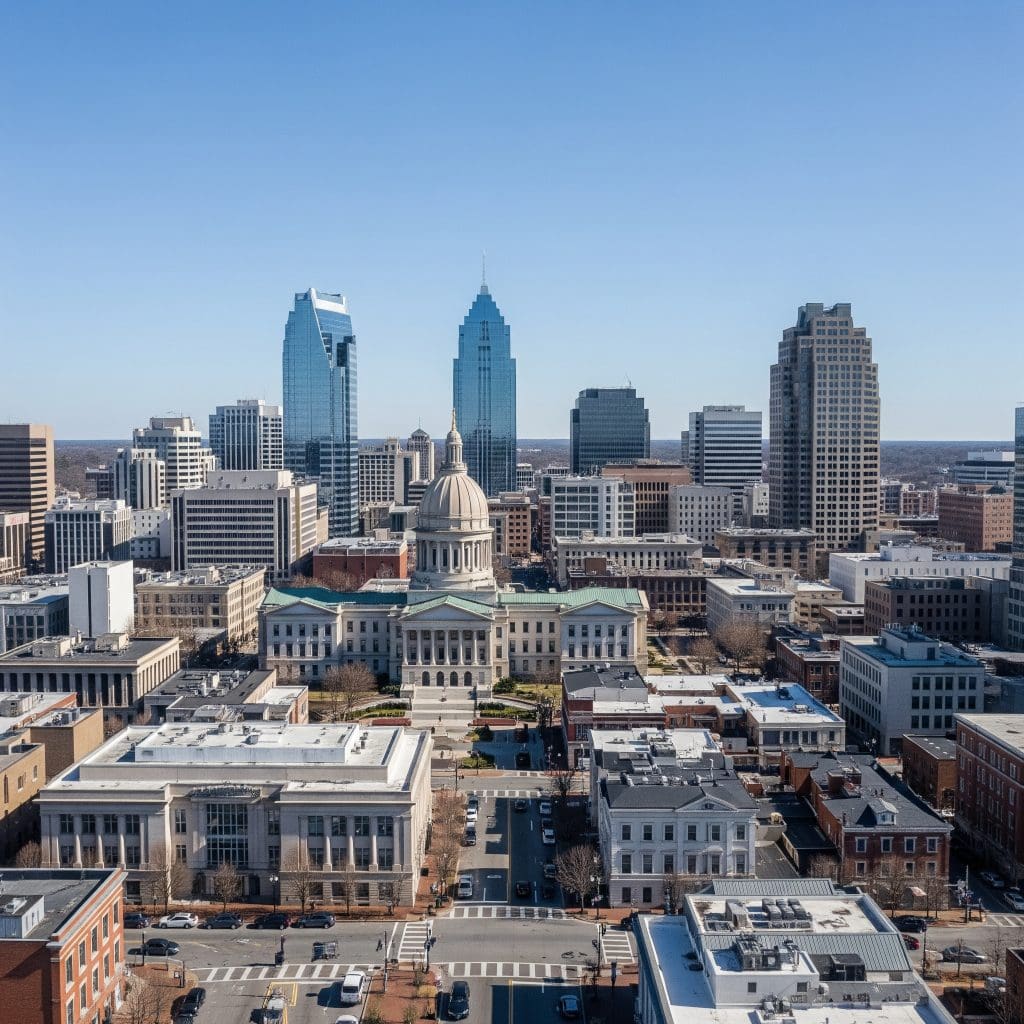
Top Maryland Cities & Metropolitan Areas for Urban Rentals
| City/Area | Median Rent (2025) | Year-Over-Year Rent Growth | Vacancy Rate | Key Drivers |
|---|---|---|---|---|
| Baltimore City | $1,600 | +6.7% | 4.5% | Medical, Logistics, Harbor Tech |
| Silver Spring | $2,100 | +5.5% | 3.2% | Proximity to DC, Tech, Biomedical |
| Rockville | $2,235 | +4.9% | 2.7% | Govt. Centers, BioHealth, Transit-Oriented |
| Frederick | $1,780 | +4.2% | 5.0% | Military, Distribution, BioAgriTech |
Why Urban Rental Properties?
- Inflation Hedge: Rents adjust more quickly to inflation than fixed mortgage payments.
- High Demand: Urban centers attract new graduates, government/defense workers, and medical professionals.
- Transit-Oriented Development: All top Maryland cities benefit from rail, bus, and transit expansion, increasing tenant demand for centrally located rentals.
Maryland Local Market Conditions & Regional Trends
Baltimore City
Baltimore remains the most dynamic urban rental market, featuring diverse neighborhoods like Federal Hill, Hampden, and Canton. While some areas face persistent vacancy and maintenance challenges, strategic holdings in revitalized districts can yield cap rates exceeding 7%. Notably, Johns Hopkins and University of Maryland Medical Center continue to anchor the local rental market.
Montgomery County: Silver Spring, Rockville, Bethesda
- Median apartment rents surpass $2,000/mo in Class B and C buildings, with consistent wage growth among government and knowledge workers.
- Excellent access to Metro and MARC rail ensures long-term tenant demand.
- Ongoing economic development initiatives, including biotech/physical sciences, support steady population growth and job creation.
Other Notable Urban Areas
- Frederick: Emerging life sciences and logistics hub, with affordable prices and value-add opportunities in classic town neighborhoods.
- College Park: Consistently high student and faculty rental demand due to University of Maryland.
- Columbia: Modern master-planned community, balancing strong schools with accessible rental demand.
State Economic Forecast & Fiscal Policy Outlook (2025)
- State Budget Surplus: Maryland projects a $1.4 billion surplus thanks to disciplined fiscal management and diversified tax revenues.
- Real Estate Taxation: Stable property tax structure, with differential rates by county and city. Maryland caps homestead tax increases at 10% annually, limiting tax spikes for primary residences.
- Infrastructure Investment: Major upgrades to Port of Baltimore, state highways, and urban mass transit projected through 2027, catalyzing commercial corridor growth.
- Incentives: Strong programs for historic preservation, low-income housing, and business development (including Opportunity Zones in Baltimore and Prince George’s County).
Inflation Hedging Strategies: Maryland-Specific Tactics
- Urban Rental Properties: Rebalance portfolio towards city center multi-family, especially in districts benefitting from revitalization funds and transit expansion.
- Value-Add Renovations: Target distressed or under-managed properties for renovation, leveraging Maryland’s Green Building and Historic Tax Credits for additional yield.
- Lease Escalation Clauses: New leases should include CPI-based escalation to capture future inflation.
- Mixed-Use Conversions: 2025 zoning changes in Baltimore and Prince George’s County enable easier conversions of underutilized retail/office into rental apartments.
Maryland’s Population & Economic Drivers
- Population (2025): 6.19 million (growth rate: +0.8%)
- Key Growth Segments: Young professionals, immigrant communities, government workers.
- Top Employers: Johns Hopkins University, University of Maryland System, Northrop Grumman, MedStar Health, and US federal agencies.
- Migration Patterns: Steady in-migration to urban cores and D.C. suburbs; moderate out-migration from rural counties.
Property Taxes and Regulatory Environment
- City/County Variability: Baltimore City rates are highest; suburban counties like Howard and Montgomery are more moderate.
- Homestead Protection: Annual tax increase cap protects primary residents.
- Rent Stabilization: No statewide caps, but Prince George’s County and Baltimore City considering targeted measures; investors should monitor local regulations.
- Landlord-Friendly Aspects: Streamlined eviction/collection processes in most counties, though with increased tenant protections post-pandemic.
Case Studies: Maryland’s Urban Rental Success Stories
Case Study 1: Hampden, Baltimore Revitalization
Investor Linda Chen acquired a distressed four-unit rowhouse in Hampden (Baltimore) in 2023 for $440,000. By investing $85,000 in energy-efficient upgrades and cosmetic renovation, she was able to increase monthly rents from $1,200/unit to $1,700/unit by 2025. Her effective cap rate rose from 4.9% to a robust 8.2%. A state historic preservation incentive covered 20% of reno expenses, further enhancing returns.
Case Study 2: Rockville Transit Proximity Advantage
Multi-family operator UrbanLift targeted two 20-unit buildings within walking distance of Rockville Metro. Despite higher per-unit costs ($210,000/unit), occupancy remained over 98% throughout 2024-25. With CPI-indexed leases, annual rent increases averaged 5.1%, outpacing inflation and protecting investor yield despite rising maintenance costs.
Case Study 3: Frederick’s Downtown Revamp
Local investor Duane Simmons saw opportunity in Frederick’s historic Main Street district, purchasing a four-story mixed-use building for .12 million. After subdividing upper levels into high-efficiency micro-apartments catering to traveling medical professionals, net rental income jumped 38% by mid-2025. Proximity to Fort Detrick and biotech employers stabilized year-round demand.
Actionable Recommendations for Maryland Investors
- Prioritize acquisition of multi-unit rental assets in Baltimore, Silver Spring, Rockville, and Frederick.
- Monitor historic and mixed-use redevelopment incentives, particularly in targeted Opportunity Zones.
- Implement lease clauses with automatic inflation adjustments to secure real yield.
- Focus on properties in transit-oriented areas; rapid MARC and Metro expansion will drive continued rental demand.
- Budget for city/county-specific property taxes—model different regions to identify optimal after-tax returns.
- Capitalize on Maryland’s continued investment in high-demand sectors like healthcare, cybersecurity, and life sciences.
Conclusion: Thriving in Maryland’s Inflationary Environment
Maryland’s stable employment landscape, top-tier education/medical sectors, and diversified economy provide a strong foundation to weather national inflation shocks in 2025. By focusing on urban rental properties in high-demand locations and implementing state-smart budgeting and investment strategies, residents and investors can protect, and even grow, their purchasing power and wealth.
For Marylanders intent on financial resilience, a nuanced understanding of local markets—paired with proactive real estate allocation—remains the most powerful inflation defense this decade.
Get a No Obligation Quote Today.

Use these trusted resources to grow and manage your small business—then connect with GHC Funding
to explore financing options tailored to your needs.
GHC Funding helps entrepreneurs secure working capital, equipment financing, real estate loans,
and more—start your funding conversation today.
Helpful Small Business Resources